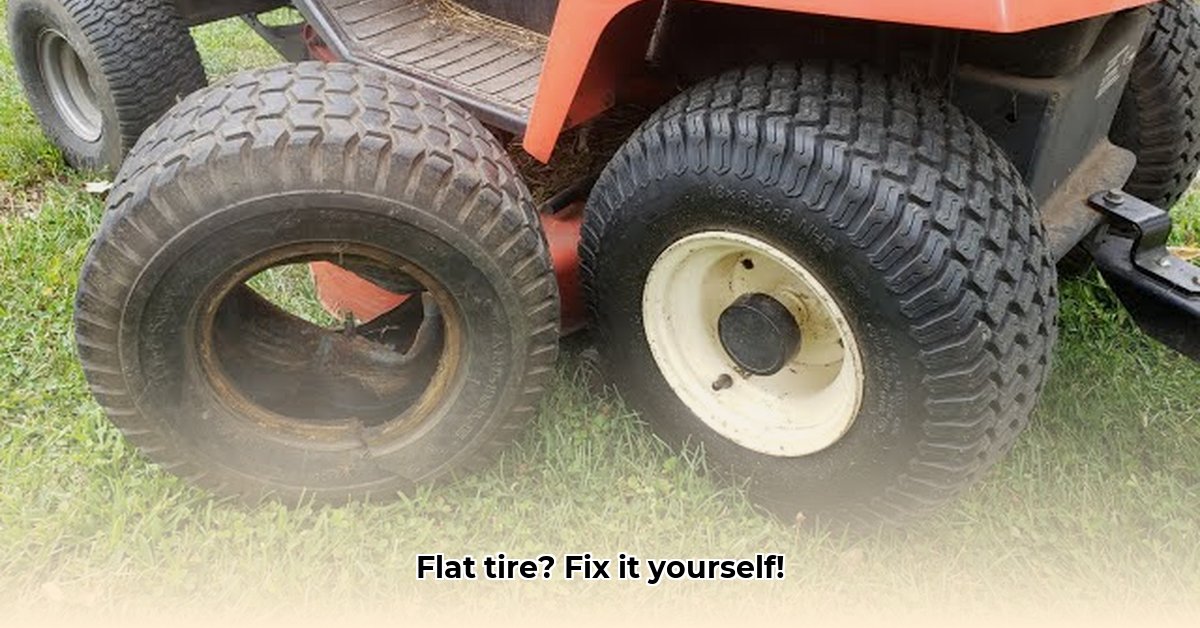
Got a flat lawn tractor tire? Don't worry! This comprehensive guide will walk you through the process of changing it yourself, saving you time and money. Even if you're not mechanically inclined, this step-by-step approach, combined with helpful visuals (imagine photos and diagrams here), will get your mower back in action quickly and safely. For more in-depth lawn tractor tire repair information, check out this helpful resource.
1. Gather Your Tools: Prepare for the Job
Before you begin, gather the necessary tools. Having everything ready will make the process smoother and safer. You'll need:
- Lawn Tractor Jack: Specific to your model; consult your owner's manual. (A device for lifting your lawn tractor's wheel.)
- Lug Wrench: For loosening and tightening lug nuts. (The tool used to remove and attach the wheel to the axle.)
- Tire Irons (Tire Spoons): Metal pry bars to help remove and install the tire. (Tools that help separate the tire from the rim.)
- New Tire: The correct size and type for your tractor model. (Replacement tire matching your tractor's specifications.)
- Work Gloves: Protect your hands.
- Safety Glasses: Essential to protect your eyes from debris.
- Wheel Chocks: To prevent the tractor from rolling. (Wedges placed behind wheels for stability.)
2. Preparing for Lift-Off: Safety First
Find a level, stable surface. Engage the parking brake. Use wheel chocks to secure the wheels opposite the one you're changing. Consult your owner's manual to locate the correct jacking points on your lawn tractor. Lifting in the wrong spot can cause damage. Remember, safety is paramount! Did you know that 80% of lawn tractor tire changes involve improper jacking procedures?
3. Removing the Old Tire: A Step-by-Step Approach
With the wheel securely elevated, carefully use your lug wrench to loosen the lug nuts. Keep them together to avoid losing any. Once loosened, remove the wheel. Next, use the tire irons to carefully separate the tire bead (the edge of the tire) from the wheel rim. Use a lubricant (like soapy water) if necessary. Work your way around the wheel slowly and deliberately, avoiding any forceful movements. This is where patience is key!
4. Installing the New Tire: Getting it Right
Position the new tire onto the rim. Begin carefully and work methodically, ensuring even seating around the rim. Use the tire irons to guide the tire bead onto the rim. A properly seated tire is essential for safe operation. An uneven fit can lead to a flat tire, even damage to the mower deck.
5. Wheel Re-installation: Back on Track
Carefully remount the wheel onto the axle studs. Hand-tighten the lug nuts before lowering the tractor slowly. Once on the ground, tighten the lug nuts completely using a star pattern (opposite nuts first, then the ones in between). This distributes the pressure evenly.
6. Inflation and Inspection: The Final Checks
Inflate the new tire to the recommended pressure (found on the tire sidewall or in your owner's manual). Do not overinflate! Inspect the tire and rim for any damage, ensuring the tire is seated correctly and lug nuts are tight. Have you ever experienced a tire blowout due to improper inflation?
7. Final Checks & Congratulations!
Give the wheel a firm shake to ensure everything is secure. You've successfully changed your lawn tractor tire. Take a moment to celebrate your accomplishment! Regular tire maintenance, including this DIY tire-changing process, can significantly extend the lifespan of your lawn tractor. Remember to always prioritize safety throughout the process.
How to Choose the Right Replacement Tire
Choosing the correct replacement tire is crucial for performance and safety. Using the wrong size tire can damage your tractor's components. Let's break it down:
1. Assessing the Damage
Carefully examine the damaged tire. Is it a simple puncture or significant sidewall damage? A damaged sidewall mandates replacement. Note the tire size and type on the sidewall for reference.
2. Deciphering Your Tire Size
The numbers on your tire sidewall (e.g., "15x6.00-6") provide key information:
- 15: Rim diameter (inches)
- 6.00: Tire width (inches)
- 6: Tire inner diameter (inches)
Using these dimensions is critical when selecting a replacement tire.
3. Choosing the Right Type
- Standard Tread: Suitable for most lawns.
- Aggressive Tread: Best for uneven terrain.
- Flat-Free Tires: Eliminate the need for air; more expensive.
Select the tire that best suits your mowing conditions.
4. Gathering Your Tools (Refer to Step 1 above)
Ensure you have all the necessary tools for a smooth and safe tire change.
5-7. Replacing the Tire (Refer to Steps 5-7 above)
Follow the detailed instructions for removing the old tire and installing the new one. Safety is your top priority at each stage. Remember to always consult your lawn tractor's owner's manual for specific instructions and safety guidelines.